|
|
|
Wil-Bond Epoxy Concrete Anchor Systems
|
|
|
|
|
|
 |
|
|
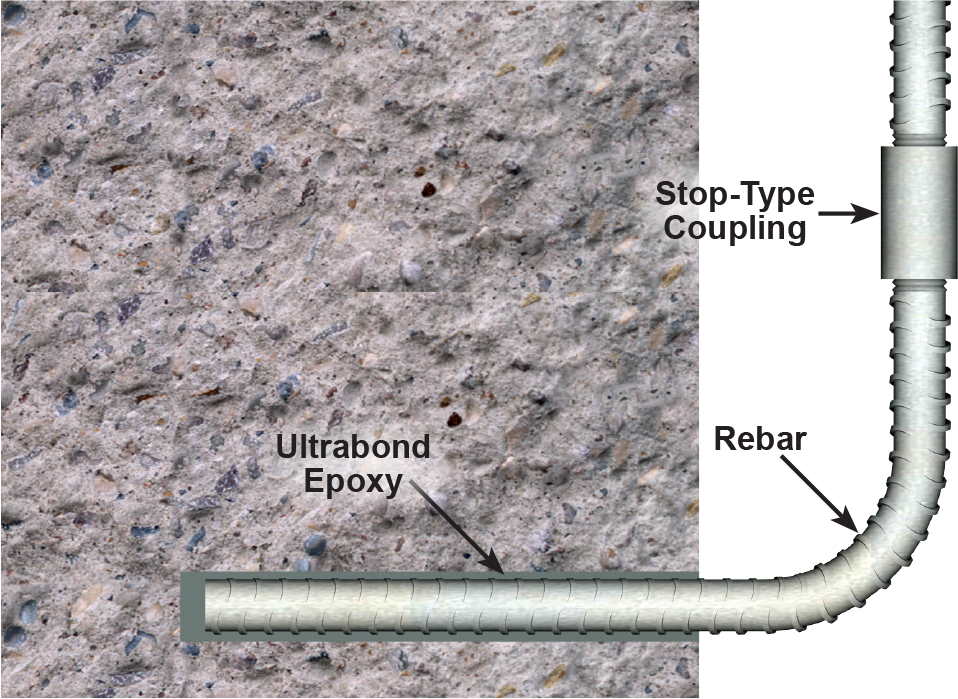
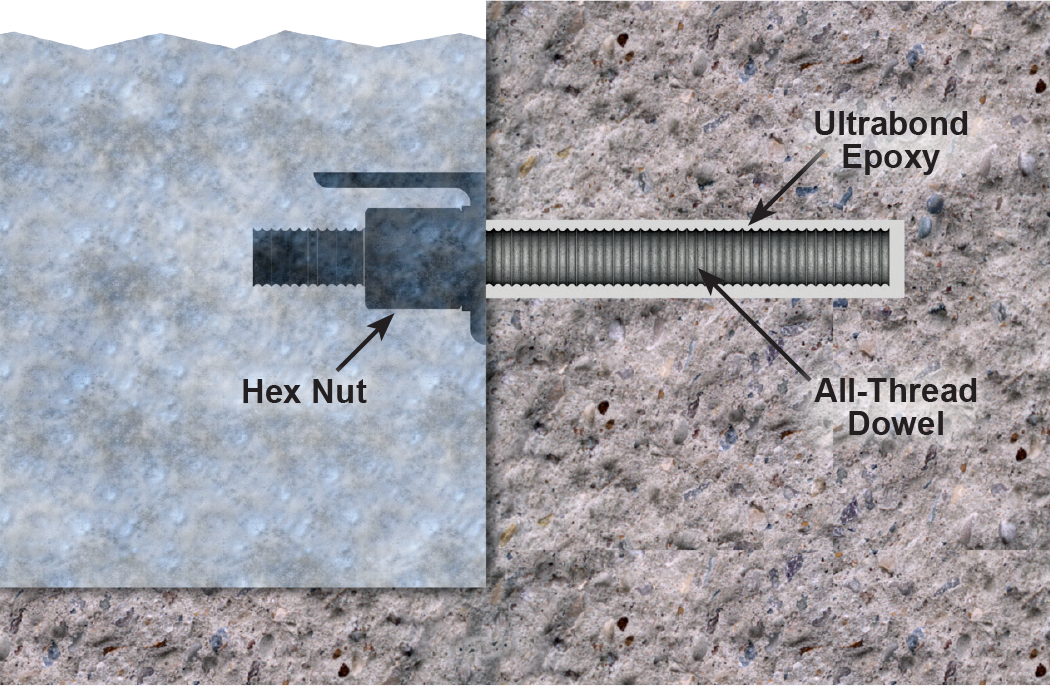
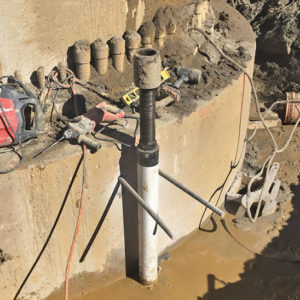
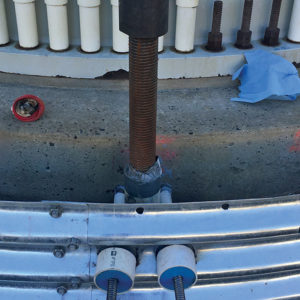
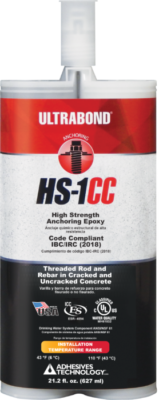
Epoxy concrete anchors are an excellent alternate to Williams high capacity mechanical anchors when applications require close anchor spacing and small edge distances. Mechanical anchors require greater spacings and edge distances because of the lateral pressure placed on the drill hole due to anchor expansion. This expansion pressure is reduced with epoxy anchor systems. Wil-Bond epoxy is ideal for passive dowels or anchors without a prestress load, however when high capacity anchors are to be prestressed the designer should consider Williams Spin-Lock mechanical anchors. Use Williams Wil-Bond epoxy anchors for concrete anchors loaded in shear. |
|
|

|
|
|
Applications for Wil-Bond Concrete Anchor Epoxy |
|
|
- Concrete Foundation Repair
- Seismic Retro-Fit
- Machinery Anchoring
- Anchors for Rail Systems
- Underwater Doweling
- Concrete Dock Repair and Construction
- Anchors Subject to Large Shear Loads
- Bridge Pier Reinforcement
- Pier Cap Repairs
- Dam Refacement
- General Plant Maintenance
- Column Anchors
- Light Poles
|
 |
|
|
|
|

|
|
|
|
Approvals and Listings |
|
|
|
ICBO ES Evaluation Report #4996
State DOT's
Wil-Bond 200 meets the new ICBO AC58 Acceptance Criteria for Adhesive Anchors in Concrete and Masonry Elements. This testing criteria was developed at the request of ICBO and engineers throughout the United States in order to evaluate the long term performance and durability of various epoxy systems under real world conditions.
|
|
|
|
 |
|
|
|
Wil-Bond Epoxy Concrete Anchor System Technical Information |
|
|
|
| Shelf Life: |
2 Years |
| Application Temperature Range: |
35° - 100° F |
| Storage: |
Room Temperature out of Direct Sunlight |
| Color: |
Resin - White |
| Hardener - Black |
| Mixed - Concrete Grey |
| Viscosity: |
Resin - 330,000 cps |
| Hardener - 150,000 cps |
|
The Wil-Bond Epoxy Anchor System is a two component 100% solids, high aspect ceramic blend amine-based epoxy. It is a solvent free, high strength, high modulus, moisture insensitive, non-sag epoxy system. |
*Temperature application range or product information range refers to the temperature range that the product is recommended for use.
The product will need to be warmed prior to use at temperatures below 70° F. |
|
|
|
|
 |
|
|
|
AC58 Test Criteria - The International Conference of Building Officials (ICBO) developed this adhesive test criteria because they recognized the necessity for engineers and contractors to be able to distinguish between poor, medium and high quality adhesives. The long term durability of the adhesive, in a variety of service conditions, is of particular importance. We are proud to say Wil-Bond demonstrates superiority and easily passes all of the service condition tests. The following data substantiates Wil-Bond’s exceptional performance.
In-Service Temperature - Test shows the strength of the anchoring systems in elevated temperatures. The following charts show the strength of Wil-Bond 100 & 200 load values versus temperature.
|
|
|
|
Wil-Bond 100 In-Service Temperature

Wil-Bond 200 In-Service Temperature

|
|
|
|
Creep - This test simulates epoxy performance for 30 to 50 years of service life. Wil-Bond 100 passed this test with a 10,500 lbs. tensile load on a 1/2” diameter anchor.
Dampness - This test shows the hole may be damp during installation. Therefore, if the construction site is exposed to a damp environment, Wil-Bond can be used without compromising the strength (rain, rivers, lakes, water treatment plants, ect.).
Seismic - This test shows the anchor system can withstand seismic activity, wind loading, and cyclic loading. Both Wil-Bond products passed this test with a 10,000 lbs. tensile load on a 1/2” diameter anchor.
Freezing & Thawing - This test shows the anchor can withstand freezing and thawing climates. This is very important in environments that experience an annual winter that goes below freezing.
|
|
|
|
 |
|
|
|
Wil-Bond 100 Epoxy Concrete Anchor System |
|
|
|
 |
 |
Wil-Bond 100 Temp vs. Bolt-Up Times
| Temperature |
Bolt-Up Time
|
Final Cure Time
|
|
95° F (35° C)
|
3 Hrs.
|
24 Hrs.
|
|
80° F (27° C)
|
4 Hrs.
|
30 Hrs.
|
|
65° F (18° C)
|
8 Hrs.
|
42 Hrs.
|
|
50° F (10° C)
|
16 Hrs.
|
56 Hrs.
|
|
35° F (2° C)
|
24 Hrs.
|
72 Hrs.
|
|
| 22 oz. Cartridge |
54 oz. Cartridge |
Wil-Bond 100 Properties
|
Gel Time (60g @ 78° F)
|
8 - 10 minutes
|
|
Cure Time (60g @ 78° F)
|
4 hours
|
|
Final Cure (60g @ 78° F)
|
24 hours
|
|
Water Absorption (24 hrs)
|
0.40%
|
|
Linear Shrinkage
|
0.003 cm/cm
|
|
Compressive Yield Strength (7 days)
|
9,880 psi
|
|
Compressive Modulus Strength (7 days)
|
191,280 psi
|
|
Tensile Strength (7 days)
|
6,790 psi
|
|
Elongation at Break (7 days)
|
1.9%
|
|
Heat Deflection Temperature
|
134° F (57° C)
|
|
Bond Strength (2 days)
|
1,100 psi
|
|
Bond Strength (14 days)
|
1,640 psi
|
|
|
|
|
|
 |
|
|
|
Wil-Bond 200 Epoxy Concrete Anchor System |
|
|
|
 |
 |
Wil-Bond 200 Temp vs. Bolt-Up Times
| Temperature |
Bolt-Up Time
|
Final Cure Time
|
|
95° F (35° C)
|
8 Hrs.
|
44 Hrs.
|
|
80° F (27° C)
|
10 Hrs.
|
48 Hrs.
|
|
65° F (18° C)
|
20 Hrs.
|
72 Hrs.
|
|
50° F (10° C)
|
24 Hrs.
|
96 Hrs.
|
|
35° F (2° C)
|
48 Hrs.
|
144 Hrs.
|
|
| 22 oz. Cartridge |
54 oz. Cartridge |
Wil-Bond 200 Properties
|
Gel Time (60g @ 78° F)
|
17 - 20 minutes
|
|
Cure Time (60g @ 78° F)
|
10 hours
|
|
Final Cure (60g @ 78° F)
|
48 hours
|
|
Water Absorption (24 hrs)
|
0.40%
|
|
Linear Shrinkage
|
0.002 cm/cm
|
|
Compressive Yield Strength (7 days)
|
10,850 psi
|
|
Compressive Modulus Strength (7 days)
|
210,800 psi
|
|
Tensile Strength (7 days)
|
7,190 psi
|
|
Elongation at Break (7 days)
|
1.9%
|
|
Heat Deflection Temperature
|
135° F (57° C)
|
|
Bond Strength (2 days)
|
1,280 psi
|
|
Bond Strength (14 days)
|
1,740 psi
|
|
|
|
|
|
 |
|
|
|
Wil-Bond Bar Strength Charts |
|
|
|
Williams All-Thread-Bars are used with the Wil-Bond adhesive for unmatched anchoring versatility and capacities. The Wil-Bond adhesive provides a molecular bond to the substrate while coating and protecting the embedded dowel. The epoxy distributes the transmitted load from the dowel into the concrete over the entire surface of the anchor hole. Since the epoxy is stronger than the concrete, the ultimate anchor load will be limited only by the concrete or capacity of the steel. Bars can be ordered cut to length or in stock lengths up to 50 feet for job-site cutting. The 360° thread provides unmatched epoxy to bar bond and also allows installers to torque-tension the anchorage if desired. Williams also supplies hex nuts, plates and washers. Working loads should be based on a 4:1 safety factor from bar ultimate strength. Listed anchor embedment depth based on 3000 PSI concrete. Assume approximately 15% waste of epoxy. |
|
|
|
 |
|
|
|
R71 150 KSI All-Thread-Bar - ASTM A722-98
Bar
Diameter |
Minimum
Ultimate
Strength
|
Minimum
Yield
Strength
|
Working
Load
(4:1 SF)
|
Approx.
Thread
Major Dia. |
Recommended
Embedment |
Quantity of
Wil-Bond
per Hole |
Recommended
Hole Diameter
|
1"
(26 mm)
|
127.5 kips
(567 kN) |
102 kips
(454 kN) |
31 kips
(137 kN)
|
1-1/8"
(28.6 mm) |
25"
(630 mm) |
4.5 oz
(8.2 in3) |
1-1/4"
(32 mm) |
1-1/4"
(32 mm)
|
187.5 kips
(834 kN)
|
150 kips
(667 kN)
|
46 kips
(201 kN)
|
1-7/16"
(36.5 mm) |
29"
(730 mm) |
11.9 oz
(21.5 in3) |
1-5/8"
(41 mm) |
1-3/8"
(36 mm)
|
237 kips
(1054 kN)
|
189.6 kips
(843 kN)
|
59 kips
(255 kN)
|
1-9/16"
(39.7 mm) |
33"
(840 mm) |
13.3 oz
(23.9 in3) |
1-3/4"
(45 mm) |
1-3/4"
(45 mm)
|
400 kips
(1779 kN)
|
320 kips
(1423 kN)
|
100 kips
(430 kN) |
2"
(50.8 mm) |
44"
(1100 mm) |
32.5 oz
(58.7 in3) |
2-1/4"
(57 mm) |
|
|
|
|
150 KSI All-Thread-Bars should not be cut with a torch. |
|
|
|
 |
|
|
|
 |
|
|
|
R61 Grade 75 All-Thread Rebar - ASTM A615
Bar Desig.
& Nominal
Diameter |
Minimum
Ultimate
Strength |
Minimum
Yield
Strength |
Working
Load
(4:1 SF) |
Approx.
Thread
Major Dia. |
Recommended
Embedment |
Quantity of
Wil-Bond
per Hole |
Recommended
Hole Diameter
|
#6 - 3/4"
(20 mm) |
44 kips
(196 kN) |
33 kips
(147 kN) |
11 kips
(48 kN) |
7/8"
(22.2 mm) |
12"
(310 mm) |
2.4 oz
(4.4 in3) |
1"
(26 mm) |
#7 - 7/8"
(22 mm) |
60 kips
(267 kN) |
45 kips
(200 kN)
|
15 kips
(66 kN)
|
1"
(25.4 mm) |
15"
(270 mm) |
3.4 oz
(6.2 in3) |
1-1/8"
(28 mm) |
#8 - 1"
(25 mm) |
79 kips
(351 kN) |
59.3 kips
(264 kN) |
19 kips
(87 kN) |
1-1/8"
(28.6 mm) |
17"
(430 mm) |
4.4 oz
(7.9 in3) |
1-1/4"
(32 mm) |
#9 - 1-1/8"
(28 mm) |
100 kips
(445 kN) |
75 kips
(334 kN) |
25 kips
(111 kN) |
1-1/4"
(31.8 mm) |
20"
(490 mm) |
5.4 oz
(9.5 in3) |
1-3/8"
(35 mm) |
#10 - 1-1/4"
(32 mm) |
127 kips
(565 kN) |
95.3 kips
(424 kN) |
31 kips
(141 kN) |
1-3/8"
(34.9 mm) |
21"
(540 mm) |
10.4 oz
(18.8 in3) |
1-5/8"
(41 mm) |
#11 - 1-3/8"
(35 mm) |
156 kips
(694 kN) |
117 kips
(521 kN) |
39 kips
(173 kN) |
1-1/2"
(38.1 mm) |
24"
(610 mm) |
12.0 oz
(21.7 in3) |
1-3/4"
(45 mm) |
#14 - 1-3/4"
(45 mm) |
225 kips
(1001 kN) |
168.7 kips
(750 kN) |
56 kips
(250 kN) |
1-7/8"
(47.6 mm) |
29"
(730 mm) |
21.4 oz
(38.7 in3) |
2-1/8"
(55 mm) |
#18 - 2-1/4"
(55 mm) |
400 kips
(1779 kN) |
300 kips
(1335 kN) |
100 kips
(444 kN) |
2-7/16"
(61.9 mm) |
39"
(980 mm) |
43.1 oz
(77.9 in3) |
2-3/4"
(70 mm) |
|
|
|
|
 |
|
|
|
 |
|
|
|
B8V High Impact Bar - ASTM A193 - Grade B7
Bar
Diameter |
Minimum
Ultimate
Strength |
Minimum
Yield
Strength |
Working
Load
(4:1 SF) |
Approx.
Thread
Major Dia. |
Recommended
Embedment |
Quantity of
Wil-Bond
per Hole |
Recommended
Hole Diameter
|
1/2" - 13 UNC
(12 mm) |
18 kips
(80 kN) |
15 kips
(66.7 kN) |
4.5 kips
(20.0 kN) |
1/2"
(13 mm) |
4-1/2"
(114 mm) |
0.2 oz
(0.3 in3) |
9/16"
(14.3 mm) |
|
5/8" - 11 UNC
(16 mm)
|
29 kips
(129 kN)
|
24 kips
(108 kN)
|
7.25 kips
(32.2 kN)
|
5/8"
(16 mm)
|
5-5/8"
(143 mm) |
0.55 oz
(1 in3) |
3/4"
(20 mm) |
3/4" - 10 UNC
(20 mm) |
42 kips
(187 kN)
|
36 kips
(160 kN)
|
10.25 kips
(45.6 kN)
|
3/4"
(20 mm)
|
6-3/4"
(171 mm) |
0.71 oz
(1.3 in3) |
7/8"
(22 mm) |
7/8" - 9 UNC
(22 mm) |
58 kips
(258 kN)
|
49 kips
(218 kN)
|
14.5 kips
(64.5 kN)
|
7/8"
(22 mm)
|
16"
(406 mm) |
2.0 oz
(3.7 in3) |
1"
(25 mm) |
1"- 8 UNC
(25 mm) |
76 kips
(338 kN)
|
64 kips
(285 kN)
|
19 kips
(84.5 kN)
|
1"
(25 mm)
|
20"
(508 mm) |
2.8 oz
(5.2 in3) |
1-1/8"
(28 mm) |
1-1/8"- 7 UNC
(28 mm) |
96 kips
(427 kN)
|
81 kips
(360 kN)
|
24 kips
(107 kN)
|
1-1/8"
(28 mm)
|
22"
(559 mm) |
3.5 oz
(6.4 in3) |
1-1/4"
(32 mm) |
1-1/4"- 7 UNC
(32 mm) |
122 kips
(543 kN)
|
102 kips
(454 kN)
|
30.5 kips
(136 kN)
|
1-1/4"
(32 mm)
|
25"
(635 mm) |
4.5 oz
(8.3 in3) |
1-3/8"
(35 mm) |
1-3/8"- 8 UN
(35 mm) |
154 kips
(684 kN)
|
129 kips
(573 kN)
|
38.5 kips
(171 kN)
|
1-3/8"
(35 mm)
|
28"
(711 mm) |
11.0 oz
(20.2 in3) |
1-5/8"
(41 mm) |
1-1/2"- 6 NC
(38 mm) |
176 kips
(783 kn)
|
148 kips
(658 kN)
|
44 kips
(197 kN)
|
1-1/2"
(38 mm)
|
29"
(737 mm) |
12.5 oz
(23.0 in3) |
1-3/4"
(45 mm) |
1-3/4"- 5 UNC
(45 mm) |
237 kips
(1054 kN)
|
199 kips
(885 kN)
|
59.3 kips
(264 kN)
|
1-3/4"
(45 mm)
|
34"
(864 mm) |
17.1 oz
(31.3 in3) |
2"
(51 mm) |
2"- 6 UN
(51 mm) |
330 kips
(1467 kN)
|
278 kips
(1236 kN)
|
82.5 kips
(367 kN)
|
2"
(51 mm)
|
43"
(1092 mm) |
24.4 oz
(44.8 in3) |
2-1/4"
(57 mm) |
|
|
|
|
 |
|
 |
|
|
|
|
 |
|
|
|
Williams Form Engineering Corp. All rights reserved. |
|