
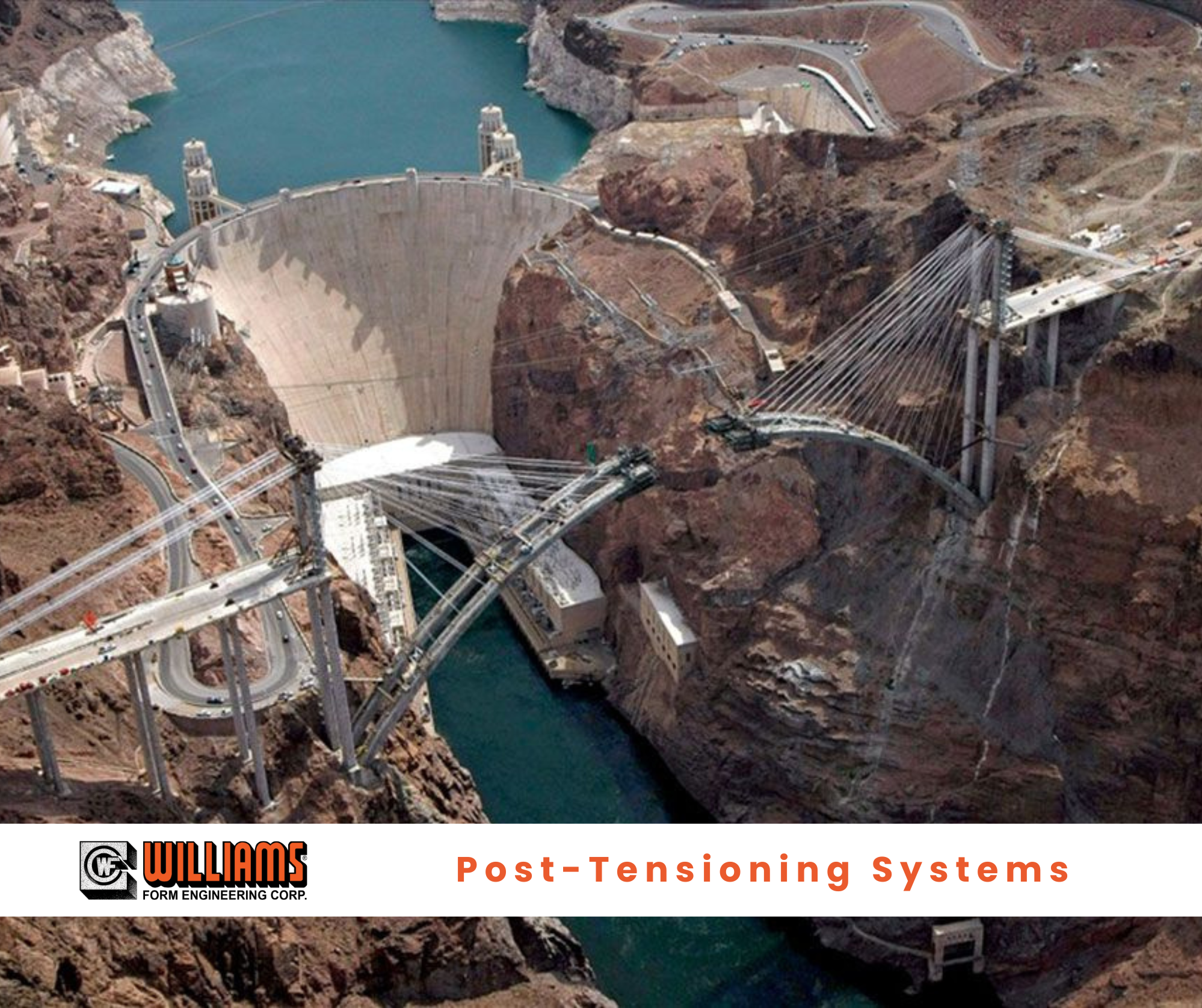
Post-Tensioning Systems – Why, Where and How to Specify Them
Post-tensioning (PT) is a proven structural technique that enhances concrete performance beyond conventional reinforced concrete. When properly designed and executed, PT reduces structural weight, controls cracking, improves durability, and enables longer spans and thinner slabs. This article outlines why PT is used, its primary applications, and the key considerations for system selection.
What is Post-tensioning
Post-tensioning is a prestressing method where high-strength steel tendons are tensioned after concrete gains sufficient strength. The induced compressive force counteracts tensile stresses from applied loads.
- Bonded (grouted) systems permanently bond tendons to the concrete, providing enhanced corrosion protection and load transfer.
- Unbonded systems encase greased tendons in plastic sheathing, allowing adjustability but relying heavily on sheath and anchorage protection.
Why Post-tensioning is Used
PT is selected for its ability to:
- Enable longer spans and thinner structural sections
- Improve crack control and serviceability
- Increase load-carrying capacity and stiffness
- Reduce dead load and foundation demands
- Accelerate construction schedules
- Lower long-term maintenance and lifecycle costs
Common Applications
Post-tensioning is widely used in:
- Cast-in-place floor slabs and flat plates
- Parking structures and residential towers
- Bridge decks and segmental construction
- Mat foundations and large pile caps
- Tanks, containment structures, and industrial foundations
Key considerations when selecting a PT system
Structural performance – Evaluate span length, deflection limits, crack control requirements, and fatigue loading to determine PT feasibility and tendon layout.
Durability and corrosion protection – Environmental exposure drives system selection. Bonded systems generally provide superior corrosion resistance when grout quality is properly controlled.
Bonded vs. Unbonded Systems
- Bonded: improved redundancy, durability, and crack distribution
- Unbonded: simpler installation and adjustability, but increased reliance on anchor and sheath integrity

Tendons, profiles, and anchorage – Select strand or bar tendons based on capacity and geometry. Draped profiles improve load balancing but require accurate placement and coordination.
Constructability and sequencing – Successful PT installation depends on access for stressing, coordinated formwork and shoring removal, and skilled installation crews.
Codes, QA, and testing – Specifications should reference applicable PT standards and include requirements for stressing records, elong
ation verification, grout testing, and inspection.
Lifecycle cost and maintenance – While PT may increase upfront costs, savings from reduced material quantities, improved durability, and lower maintenance often result in favorable lifecycle economics.
Best practices for specification
Effective PT documents include:
- Clear tendon layout and profiles
- Defined stressing sequences and concrete strength requirements
- Grouting procedures and acceptance criteria (for bonded systems)
- Installer qualification requirements and QA documentation
Conclusion
Post-tensioning delivers measurable performance, constructability, and lifecycle advantages when properly specified. Early collaboration between the engineer, contractor, and experienced PT supplier—such as Williams Form Engineering—helps reduce risk, optimize design, and ensure long-term structural performance.
For project-specific guidance, Williams Form Engineering offers PT feasibility reviews, specification support, and constructability consultation to help teams specify post-tensioning with confidence. Let a Williams Form Engineering rep assist with detailed design and deployment tailored to your application.